Breadboarding modules

September 4th, 2011


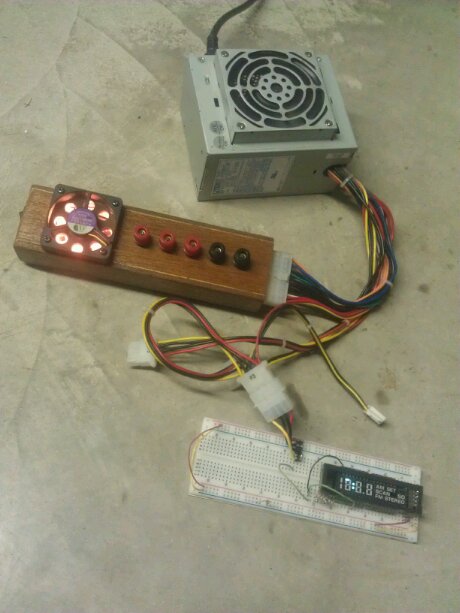
This is a followup to the article Breadboarding adapters .  Recently I noticed a post on makezine about somebody that was making plug-in modules for solderless breadboarding, and thought I would share my creations as well.  I also made a battery “juice bridge” a while before I noticed this.  Great ideas. Read the rest of this entry »

ZeptoProg AVR Programmer

April 14th, 2011

ZeptoProg AVR Programmer

Just recently I upgraded my computer, which meant no more parallel port. So I needed a USB method of uploading new firmwares to Atmel AVR mcu’s. (This will also enable me to use my laptop as well for AVR programming.) To this end, I purchased the ZeptoProg AVR Programmer from Mattair Tech, LLC.

It was not without challenges however, one being the permissions under Ubuntu 10.04 for usb devices. Read on for more info about how I solved this using the udev permissions file /etc/udev/user.rules file.

Read the rest of this entry »

Pine-strip Kayak

November 12th, 2010

Pine strip, not cedar strip, kayak

This is the first boat-building post to show up on my site, but it’s actually the third kayak I’ve built.  The first two were “one-sheet” plywood stitch and glue kayaks, each 92 inches in length.  This boat will be just short of twelve feet.  It is made of pine, cut from a wide board to get a nice quarter-sawn grain.UPDATE: I’m nearly finished, and have already had this kayak in the water! (It was an exciting moment) Read the rest of this entry »

Inductance meter

April 14th, 2010

Some time previous to getting my ham license, I was at a friends house who showed me an LC (inductance) meter built from a kit. It was based on a PIC16C22A, and I certainly do like the PIC mcu’s, but decided I would embark on the task of re-engineering my own that uses an Atmel AVR chip, the Atmega168. It’s been a journey. Also, I am giving away for free, the schematics, firmware, and source code as open source under the GPL. Read the rest of this entry »

Desoldering Tweezers

January 28th, 2010

Desoldering Tweezers

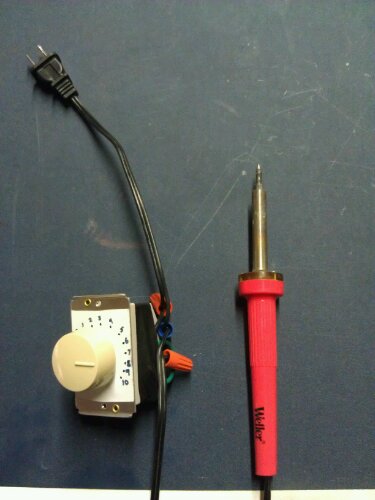
Here is a new desoldering tweezer tool I just made, it’s rough and there will be improvements, very likely.  It looks kind of dangerous, but it’s really low voltage, under a volt, barely enough to register on my digital voltmeter.These tools cost hundreds of dollars if you want to buy them somewhere, but I made mine out of cheap radio shack parts and junk.  The power supply is also homebuilt, which I also use for my hot air pencilRead the rest of this entry »

Breadboarding adapters

November 19th, 2009

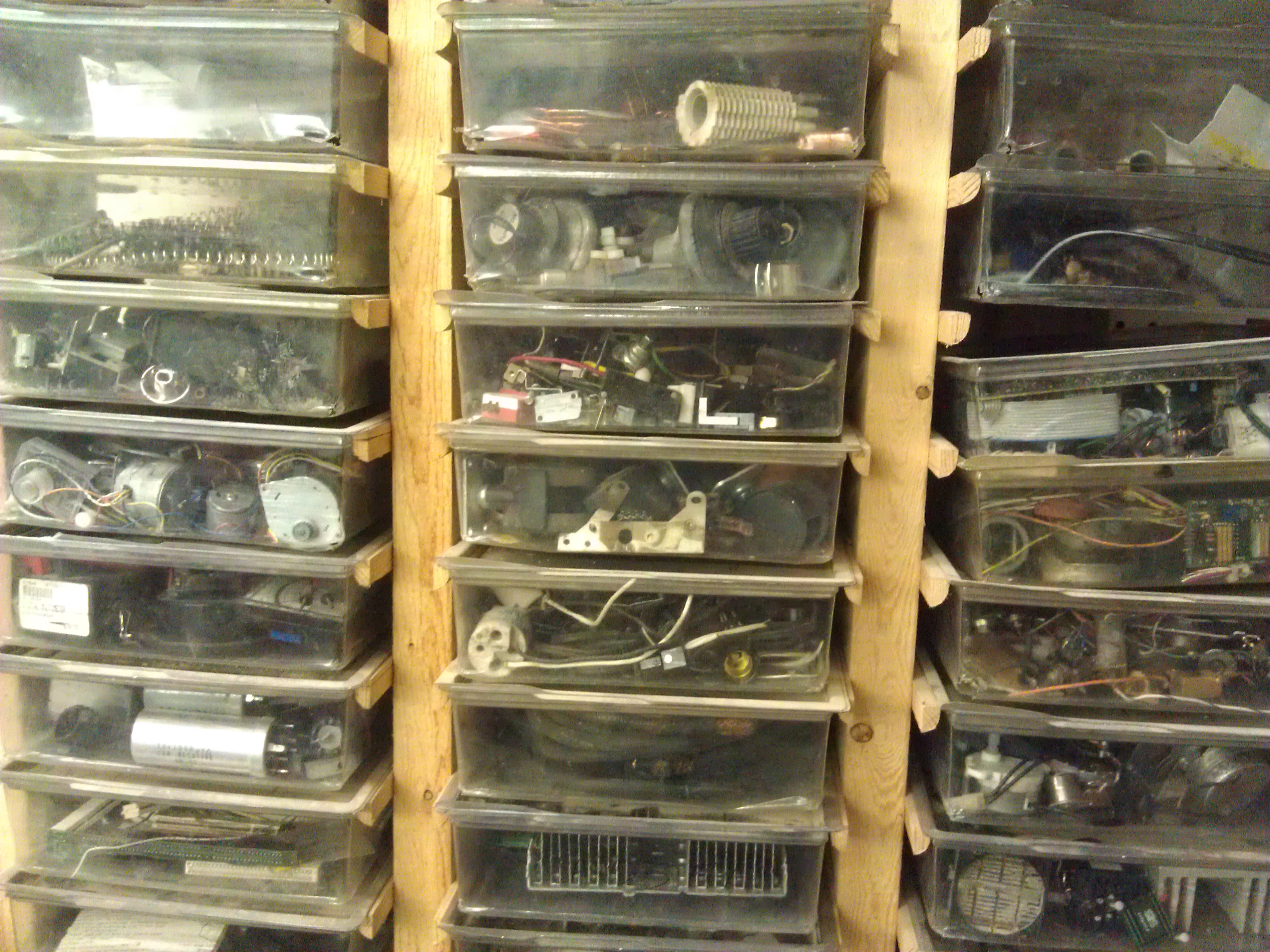
Recycling old ISA cards

I’ve long been a fan of solderless breadboarding.  And frankly any kind of breadboarding, even the soldering type.  When you need to whip out a circuit fast, don’t have time to etch a board, here are some of my tricks.

Exercise Bike Generator

November 14th, 2009


Exercise bike, driving an auto alternator
So I had this old exercise bike that was a cheap imitation of a Schwinn
Airdyne™.  It didn’t have nearly enough resistance to suit me, I could
pedal it really fast and not get much of a workout.  This exercise bike
sat in my attic for a number of years, and then one day I got an
idea… Read the rest of this entry »

HW Foam Cutting Table

January 22nd, 2009

Hot wire cutting bow, top terminal

Here are more details on my hot wire foam cutting table.  I show the details of the terminals attaching the hot wire at top and bottom.  The bow is made of threaded rod so adjusting an angle on the wire is trivial. Read the rest of this entry »

Snowshoes

January 21st, 2009

Here are some snowshoes that I made.   They cost about $9 in new materials, and used some items from my existing inventory.  Yes, those are snowboard bindings.
Snowshoes constructed of steel tubing and LDPE, no, polypropylene Read the rest of this entry »

Cool web links here and there

January 9th, 2009

Sometimes technical, sometimes off-topic, but always a diary of what I’ve found interesting in my browsing.

At AAAWelder.com  you’ll learn how to build your own boat and hand crafted Oars, construct a 100 Amp “Buzz Box” Welder and learn how to weld with it, assemble a working A.C. Generator for portable electric power, read short adventure stories and much more…

I wanted to find out how to set up ground planes in Eagle PCB editor, and knew it shouldn’t be too hard to do.  Turns out it’s really easy, and below is a link to a simple tutorial on how to do it.  There are lots of reasons to use ground planes–RF and cross-talk shielding, saving your developing and etching solution,s to name a few.

http://www.muzique.com/schem/eagle.htm

Here’s a page I found when looking for the specific heat of water ice.
In the old days, they harvested ice off of lakes and used it for
refrigeration.  A gallon of water ice needs to release and absorb 351.8
watt-hours of heat energy in order to cross the freeze/thaw phase.
http://www.rwc.uc.edu/koehler/biophys/8c.html

I found a nice calculator for electrical calculations.  It does the
four quadrants of the electrical pie, calculations for power, voltage,
current, and ohms.  Very nice.  One day I needed to know the amperage
draw and power output of a piece of wire with 12 volts applied to it,
and I found this:
http://www.the12volt.com/ohm/page2.asp

Lately I’ve been interested in GPS navigation.   A friend and I have
been doing canoeing and hiking adventures, and I needed to convert
between, hmm, what was it now?  There are so many different coordinate
systems.  This one will convert between GPS coordinates with degrees
and seconds (even with a decimal in the seconds), decimal degrees, and
DMS (Degrees, minutes, and seconds) coordinates.
http://www.cosports.com/index.php/tool/tools/latlong

I do the recording at my church, and one thing we’re trying to figure
out is how to pipe our P.A. system into the phone line, so we can do
conference calls where people such as the elderly or otherwise house
bound, or remote members can call in and hear the service.  I found
this site to be inspiring in regards to adapting signals from audio to
telephone:
http://www.vtx.co.uk/remote/telephone_interfaces.htm